


 Português
Integrated Partner Project Delays
- July 28, 2026
- 8 min read
- Safety & Compliance

KOZATTI OPERATIONAL INSIGHT
Why Angola’s project delays often begin where supply, people and maintenance fail to connect – and how KOZATTI helps close those gaps.
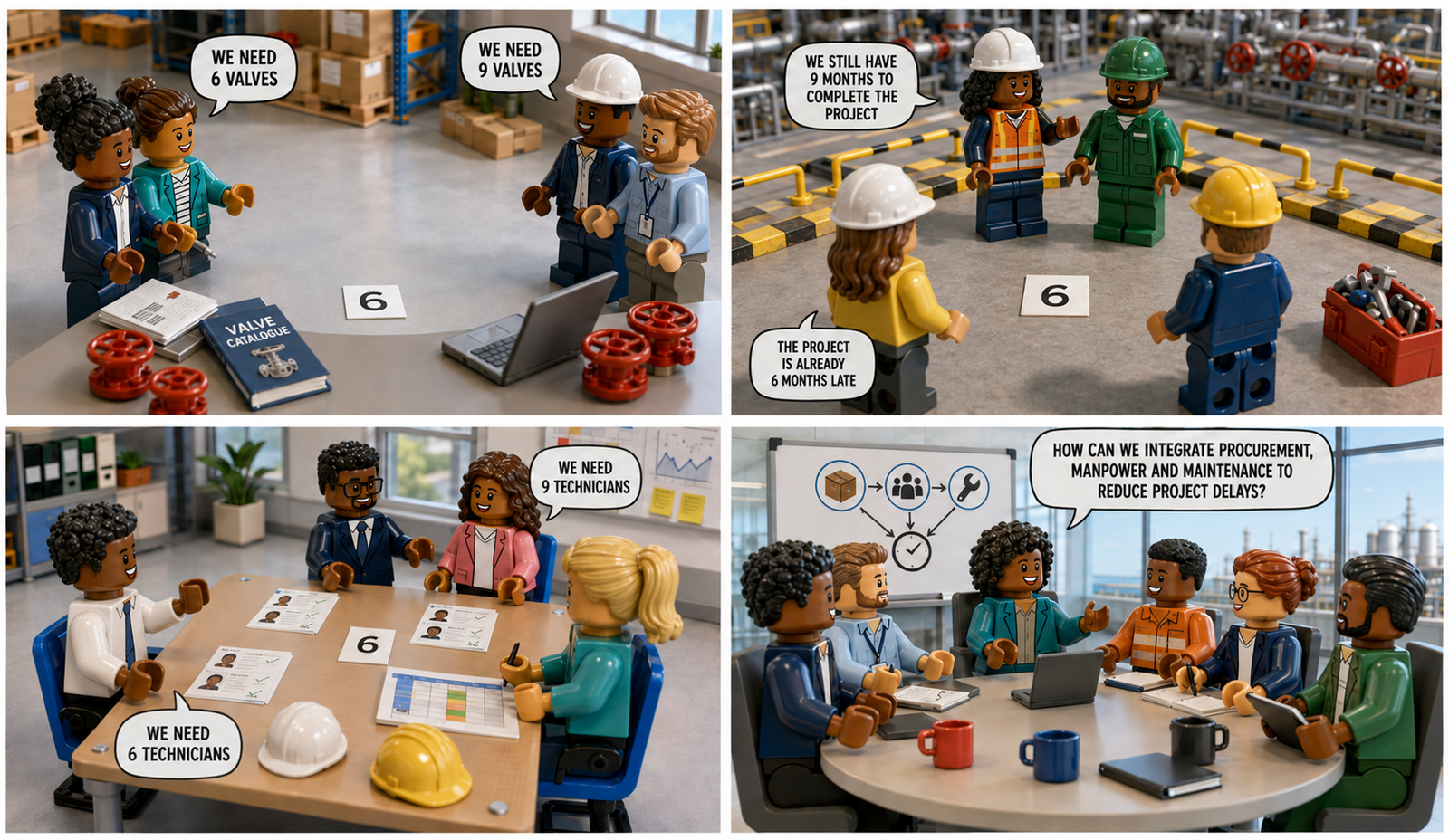
| For project and operational leaders: The objective is not to manage more suppliers. It is to make procurement, workforce mobilisation and maintenance readiness work to one schedule, with clear accountability for the interfaces between them. |
For Project, Procurement and Operations Managers in Angola, schedule slippage rarely begins with one catastrophic event. It develops through smaller disconnects that eventually turn a planned activity into an urgent recovery exercise:
Individually, these issues seem manageable. Together, they create downtime, emergency purchasing, premium freight, remobilisation, rework and missed milestones.
In Angola, where specialised equipment is frequently imported and technical resources require careful mobilisation, fragmentation directly threatens project schedules, maintenance performance and operational continuity.
Many organisations appoint separate providers for procurement, manpower and maintenance. Each may fulfil its individual scope while the overall activity still starts late or remains incomplete.
Materials may arrive after the maintenance window. Personnel may be supplied without confirming equipment-specific competence. Maintenance teams may mobilise only to discover that a critical tool, consumable or test instrument was omitted.
The client then becomes the integrator. Project Managers expedite materials, Procurement Managers chase technical clarifications, and Operations teams coordinate access, technicians and tooling instead of focusing on safe execution and asset availability.
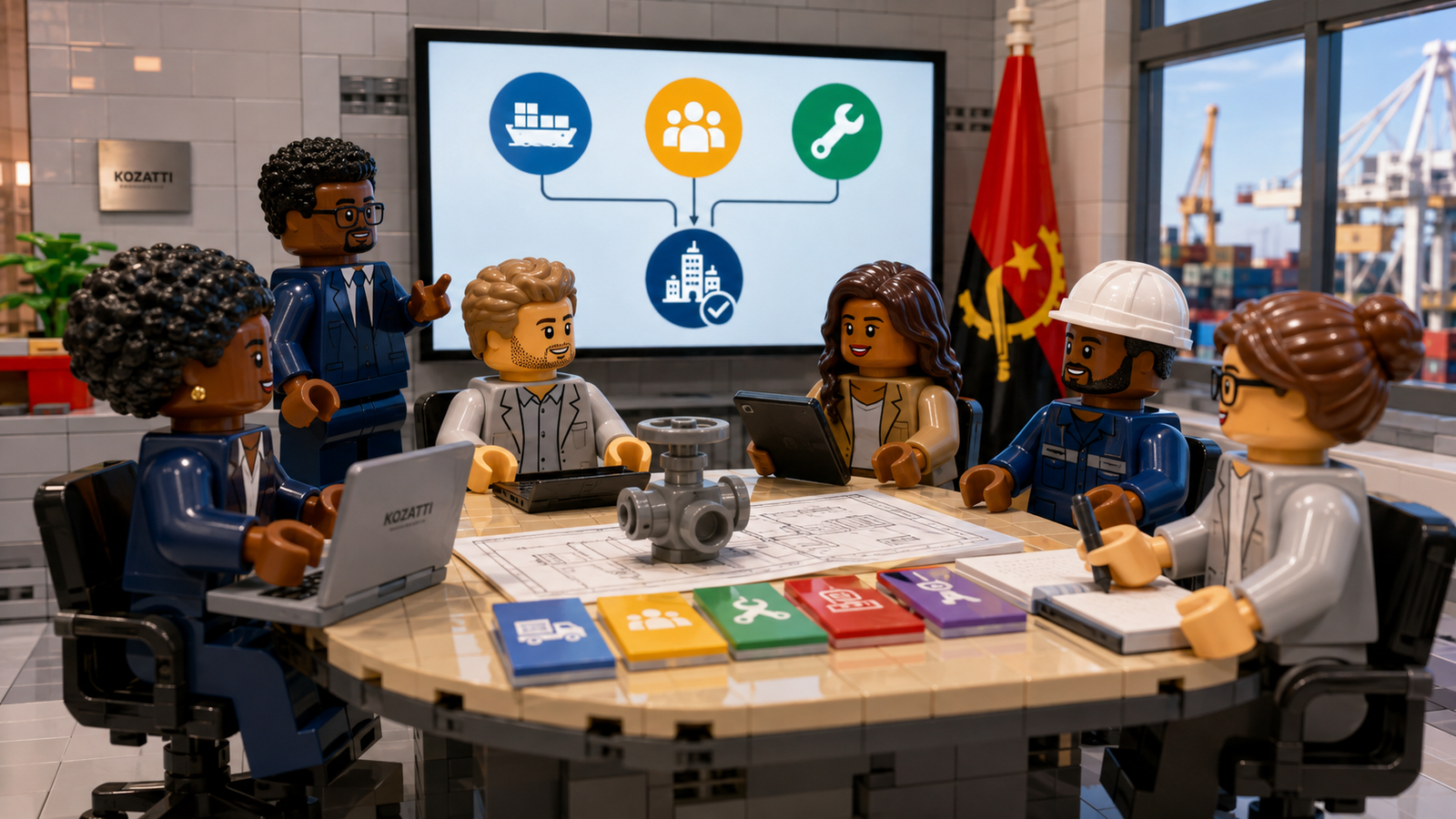
An integrated partner changes this by managing procurement, manpower and maintenance as connected parts of one delivery plan.
Many Oil & Gas, energy, marine and industrial components are unavailable locally. OEM spares, hazardous-area equipment, specialist valves, instrumentation and certified consumables often require sourcing from South Africa, Europe, Asia, the Middle East or directly from manufacturers.
Urgent requirements face limited stock, premium logistics costs and long lead times. Effective procurement must verify specifications, confirm availability, assess acceptable alternatives and manage documentation, certification and delivery through to the worksite.
International sourcing is only the beginning. Equipment must still pass through export handling, freight, customs clearance and local delivery.
Incorrect invoices, cargo descriptions, classifications or missing certificates can turn an attractive quotation into an expensive delay. Procurement decisions in Angola must therefore consider total delivered value and schedule risk—not unit price alone.
Personnel availability does not guarantee operational readiness. Maintenance work may require specific competencies, safety training, offshore certification, medical fitness and experience with particular equipment.
When mobilisation is disconnected from the work pack and material plan, productivity declines, additional support becomes necessary and maintenance windows are extended.
Maintenance requirements often become emergencies because parts, tools, consumables and competencies were not aligned early enough.
Spares may remain in transit, technicians may lack the correct tools, or equipment may arrive without installation documentation. These are symptoms of a disconnected delivery model.

Oilfield maintenance in Angola operates under demanding conditions. Critical spares are often unavailable locally, OEM lead times can be long, importation requires careful control, and offshore mobilisation depends on qualified personnel and precise coordination.
Even a technically sound maintenance plan can be delayed because one component is held at customs, a consumable was omitted from the RFQ or technicians were mobilised before the materials and tools were ready.
KOZATTI encounters these challenges while supporting clients across Angola’s Oil & Gas and industrial sectors. We connect procurement, manpower and minor maintenance around one objective: ensuring that materials, people and execution are ready at the same time.
An urgent RFQ is often the final symptom of a problem that began earlier.
A purchase request may include a part number and quantity without explaining whether the item supports planned maintenance, a shutdown or an equipment failure. Without this context, the correct item may arrive too late—or without the certificates, accessories or tools needed for installation.
Before sourcing or mobilising, KOZATTI confirms:
This alignment reduces incomplete RFQs, incorrect orders and materials arriving without an executable plan.
An item shown as available overseas must still be verified, documented, transported, cleared and delivered before it becomes available to a project in Angola.
KOZATTI evaluates each requirement according to:
Where appropriate, we also investigate local stock, regional sources and technically acceptable alternatives.
The critical question is not simply, “Which supplier is cheaper?” It is, “Which compliant option has the best chance of arriving before the maintenance window?”
Oilfield personnel may require specific competencies, medical fitness, offshore certification, HSE training and equipment experience.
Mobilising too early creates standby costs. Mobilising without the correct materials or tools causes delays and repeated site visits.
KOZATTI aligns manpower with the confirmed scope, material-delivery date, technical requirements and site conditions, helping ensure that technicians arrive when the work can be performed.
Maintenance performance depends on more than labour. Spares, consumables, tools, documents, permits and competencies must be available together.
KOZATTI helps clients identify these dependencies before mobilisation, reducing the risk of:
Our objective is to ensure that materials, people and supporting requirements are ready when the asset becomes available.
When procurement, logistics, manpower and maintenance are handled separately, the client often coordinates every interface.
Equipment may have shipped while documentation remains incomplete. Personnel may be available while the necessary tools are not. Every provider may be working, yet the maintenance activity remains delayed.
KOZATTI reduces this burden by coordinating the delivery chain, following critical requirements and escalating risks early enough for corrective action.
No provider can eliminate every operational risk in Angola. However, an integrated partner can prevent those risks from remaining unseen or unmanaged until they affect the schedule.
That is the KOZATTI approach: understand the operational problem, coordinate the interfaces and prepare the complete requirement before urgency becomes downtime.

Integration aligns material lead times, workforce mobilisation and execution dates. It supports realistic planning, earlier risk identification and fewer last-minute interventions through one coordinated delivery interface.
Evaluation extends beyond quoted price to include technical compliance, stock, freight, customs exposure, certification, installation readiness and the financial impact of downtime. Procurement becomes a contributor to project performance rather than a transactional response to emergencies.
Integration improves the likelihood that teams receive the correct parts, tools and support when the asset becomes available. This reduces waiting, remobilisation and extended downtime while improving visibility of recurring requirements and critical spares.
KOZATTI is already applying this approach while supporting clients and project teams in Angola. We coordinate international sourcing, logistics, delivery and personnel mobilisation around maintenance and operational priorities.
Our experience shows that many costly interventions could be avoided if procurement, manpower and maintenance were connected earlier. We therefore look beyond individual RFQs and call-outs to identify dependencies that may prevent successful execution.
In Angola, overseas stock is not available until it is verified, documented, imported and delivered. Personnel are not ready until competencies, documentation and access are confirmed. Maintenance can only begin when materials, people, tools and site conditions are aligned.
Warning sign: If the answers are fragmented across several providers, the project remains exposed.
Angolan projects will continue to face supply constraints, import challenges, specialist-skills gaps and pressure for stronger local participation. These realities cannot always be eliminated, but they can be managed.
The strongest model connects procurement to the maintenance requirement, prepares manpower for the work scope and plans execution around actual material availability.
That is the operating model KOZATTI is building: locally informed, internationally connected and accountable for keeping projects moving.
If your project faces repeated emergency purchases, delayed mobilization, unavailable spares or maintenance activities that cannot begin as planned, fragmentation may be the underlying problem.
KOZATTI can support:
KOZATTI: Integrated Procurement, Manpower and Maintenance Support for Angola’s Industrial Projects.